How Drivers Choose a Racing Line Through a Corner
Learn how drivers choose a racing line through a corner, read an apex, and spot when a rival or the next turn changes the route that makes sense.
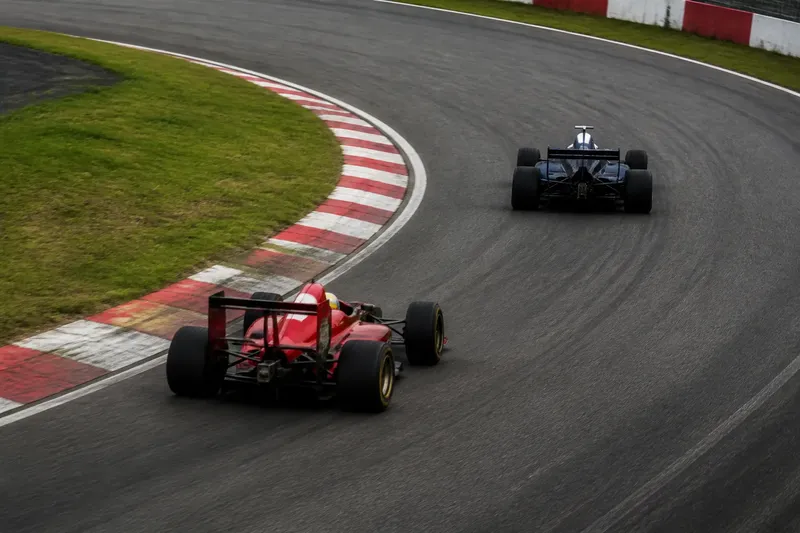
A racing line through a corner changes with traffic, the turn that follows, and the driver’s immediate aim. The path may favor a smooth arc, a useful exit, or space that blocks a rival; it is not one painted route that suits every situation.
Line and purpose
Think of a corner as a shared stretch of track with an approach, a middle, and an exit. The apex is the point where a car comes closest to the inside edge. A racing line connects these parts, but the driver must choose a route that fits the corner and the cars nearby.
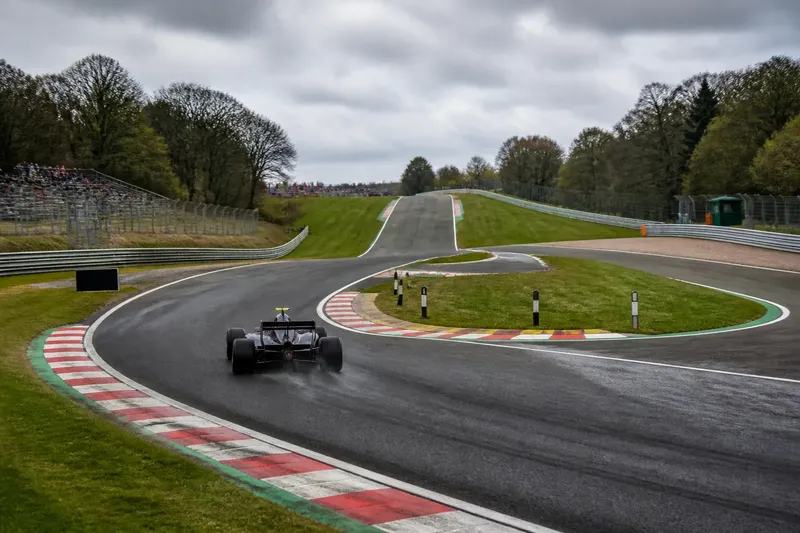
A familiar broad arc starts near the outside edge, turns toward the inside around the apex, then opens toward the outside on exit. This route uses space across the track and keeps the change of direction flowing. Traffic can make that space unavailable, and the next corner may make a different exit position more useful.
The phrase “racing line” can sound like the name of a single ideal curve. In practice, the line is a plan for using available track. A driver may prioritize momentum, a pass, a defended position, or a favorable approach to the next turn.
The broad arc
A broad arc suits a corner where the driver has room to choose a path across the track. The car approaches from the outside, turns toward the apex, then uses the available width on exit. The route can look smooth because the car changes direction gradually.
That path needs open space. A rival may occupy the inside or the exit, leaving the driver no room to follow the full arc. A tight turn or a closely linked sequence of corners can also make the broad route less useful than a line that prepares for what comes next.
Rather than judging whether a car follows a perfect curve, watch what its path allows it to do after the corner. Track shape, traffic, and the next section all affect which route makes sense.
The late apex
With a late-apex line, the driver stays away from the inside for longer, then reaches the closest point to it later in the turn. The car’s path favors pointing toward the exit after that later apex. This can matter when the corner leads onto a straight or into a section where exit placement is useful.
A late apex is not automatically the better route. The shape of the corner and the position of other cars still matter. Look at the relationship between the apex and the exit: a later inside point can suggest that the driver is shaping the turn around the section ahead.
The defensive route
A defensive line responds to a rival’s position. A driver may move toward the inside before the turn to make that route harder for a car behind to use. The defender then has less room for a broad arc and may approach the exit on a tighter path.
This choice prioritizes holding space over following the most open route. It is not simply a narrower version of a normal line: the rival’s location determines which space remains available and what the defender is trying to protect.
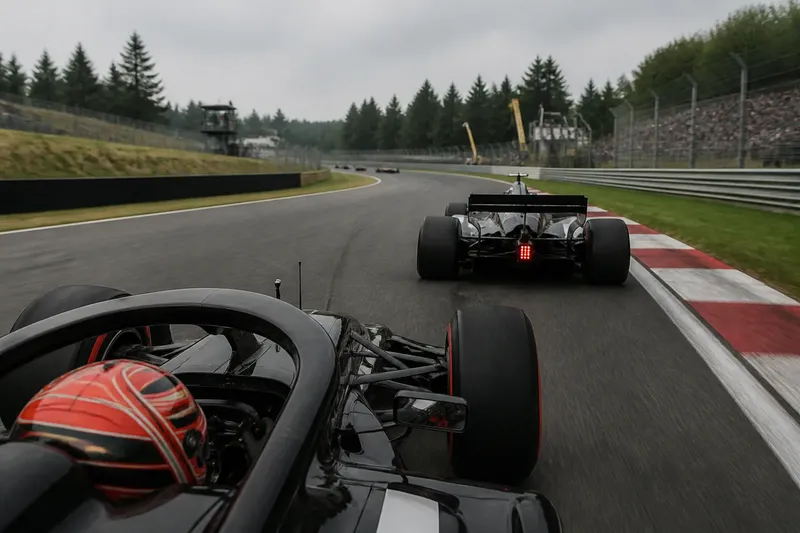
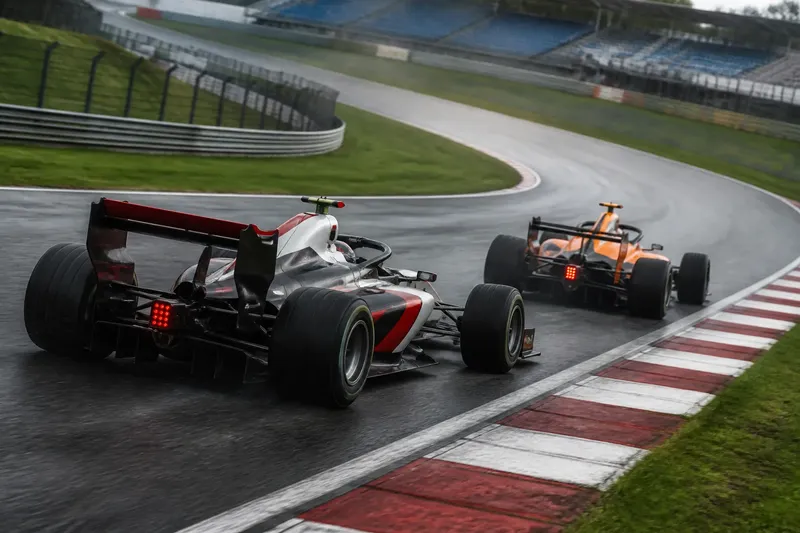
When cars are alongside, their positions affect the space each can use. To read the corner, notice where the rival is and whether the driver leaves room beside the car, rather than judging the line as if the track were empty.
Reading line choices
- Check the next section. If a straight follows, then watch for a line that points the car toward the exit; if another turn follows quickly, then see whether the driver positions the car for that turn.
- Check the available width. If the track beside the car is open, then a broad arc may be possible; if a rival occupies that space, then look for a route that avoids it.
- Check the rival’s position. If a car is alongside, then compare the space each driver leaves; if it is behind, then watch whether the leading driver moves to protect the inside.
- Check the likely priority. If the driver turns toward a later apex, then consider whether the exit is being favored; if the driver takes a tighter inside route, then consider whether a rival is being kept out.
- Check the exit. If the car opens toward the next section, then note how it is positioned for what follows; if it stays tight, then look for another car or a later turn that may explain the choice.
- Check the approach and apex together. If the car stays wide before turning in, then watch whether it reaches the inside later; if it moves inside early, then compare that route with the space available at the exit.
Say you are watching an invented race at a left-hand corner followed by a long straight. Car A approaches from the outside and turns toward the inside before the apex; Car B stays farther from the inside for longer, then turns in later. As they leave the corner, Car A is still on a tighter path while Car B points more directly toward the straight. The visible tradeoff is that Car B’s route favors the exit, while Car A reaches the inside sooner; this corner alone does not establish which car has the better overall position.
Why do lines differ?
Is there one ideal racing line?
No single route suits every corner, traffic situation, and aim. A broad arc may fit an open turn, while a late apex or defensive route may make more sense in another moment.
What does the apex show?
The apex is the car’s closest point to the inside of the corner. Its position helps you see whether the driver is following a broad path, favoring the exit, or responding to another car.
Why leave the broad arc?
A rival may occupy the space the arc needs, or the driver may be preparing for the next section. A different path can be a deliberate response to the available room.
How can I compare two lines?
Watch where each car approaches the inside, how it uses the exit, and where it ends up relative to the next stretch. This makes the drivers’ different priorities easier to see than judging only how smooth each path looks.
Intent on track
A racing line through a corner is a visible choice: it can favor a flowing turn, a useful exit, or control of space near a rival. Compare the approach, apex, and exit with the corner that follows. That context helps explain why two drivers can take different paths through the same bend.
When two cars reach a turn together, follow each from approach to exit. Notice where they reach the apex, what space remains beside them, and how their positions relate to the next part of the circuit. Those details reveal the decisions behind the lines without requiring you to call one route universally best.