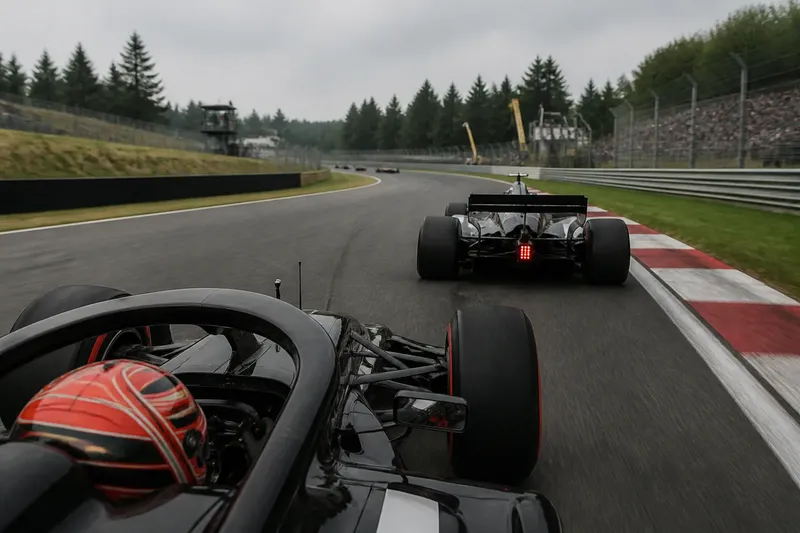
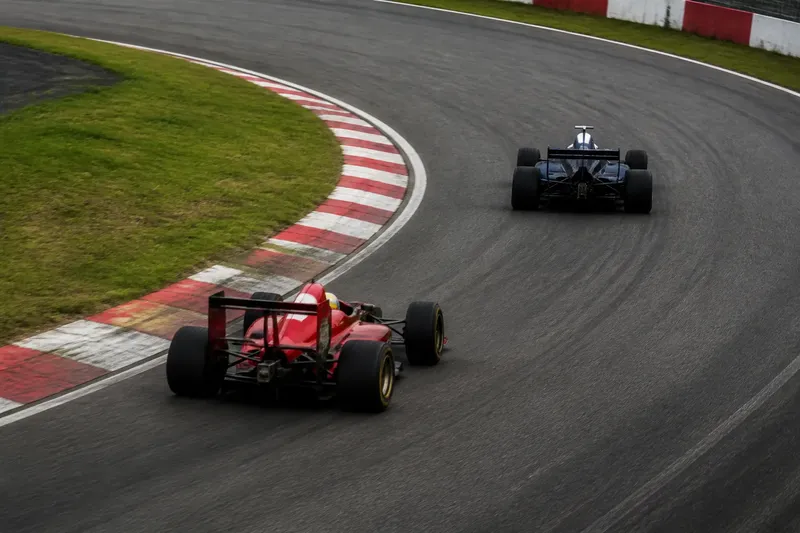
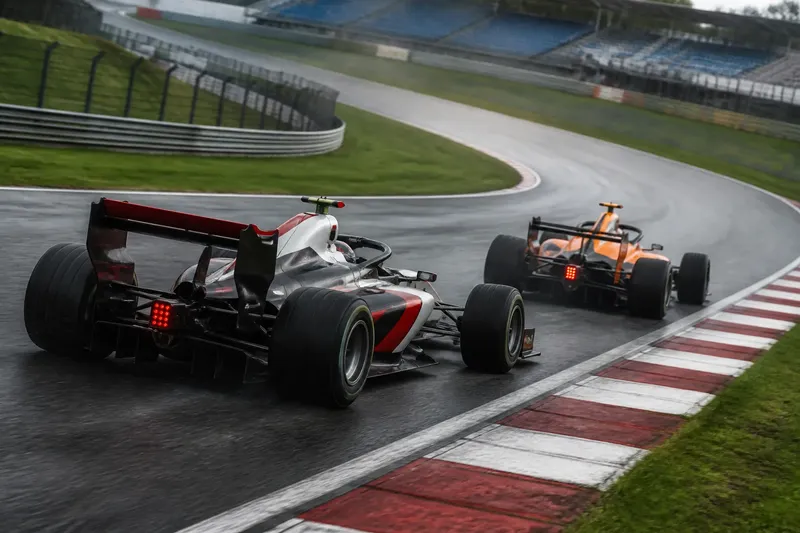
Why a Chicane Breaks Up a Straight
Why a chicane breaks up a straight: see how its placement interrupts speed, redirects a car, and changes the approach to the corner or section beyond it.
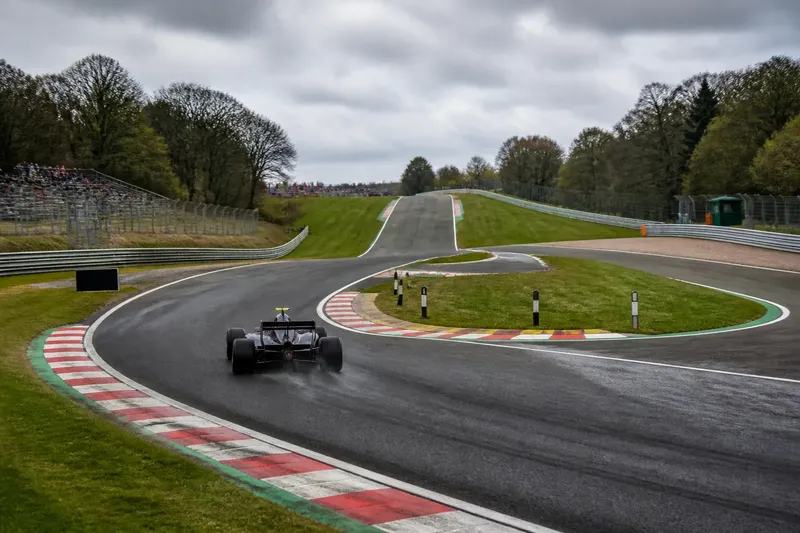
A chicane breaks up a straight by making a driver brake, change direction, and line the car up again before accelerating. Why a chicane breaks up a straight depends on where it sits: its position shapes the approach and the exit into the next section.
A circuit is a sequence of demands. A straight lets speed build; a chicane interrupts that rhythm and asks for braking, directional control, and a new exit. Place the same chicane near a tight corner, a fast bend, or another straight, and the sequence changes even if the chicane itself looks much the same.
The interrupted straight
On a straight, a driver can generally keep the car pointed in one direction while building speed. As the braking point approaches, the task changes. The driver slows the car, places it for the first turn, and prepares for the second. A chicane compresses several decisions into a short stretch of track.
A chicane commonly consists of alternating bends, often with a curb or island defining the route. Its geometry matters. A wide, flowing pair of bends may let a car maintain more momentum, while a tighter sequence demands greater speed reduction and careful placement. The label “chicane” alone does not tell you how severe the interruption is.
For spectators, the useful question is what the sequence makes a driver give up. The car may lose speed on the approach, spend time changing direction, and need to straighten before accelerating hard. A chicane can turn a seemingly simple straight into a section where braking and exit position shape the next opportunity.
Placement shapes approach
Where a chicane sits along a straight changes the approach. Near the end of a long straight, it gives speed time to build before braking. Move the same feature closer to the preceding corner, and the car may arrive still accelerating or with less time to settle after that corner.
That difference affects the driver’s preparation. On a long approach, the driver can focus on a clear braking reference and then shift attention to turning. On a short approach, the previous corner’s exit feeds directly into the braking phase. The driver must manage the handoff between those tasks rather than treating them as separate episodes.
Placement also affects what follows. A chicane that opens onto another straight rewards a clean exit and a car that can point forward promptly. One that leads into a tight corner makes the approach to that corner part of the same problem. Drivers must leave the chicane positioned for the next change of direction, not merely clear its final curb.
What follows the chicane?
Why put a chicane before a straight?
A chicane before a straight makes the exit important because acceleration begins only after the car is sufficiently aligned. A driver who completes the direction changes cleanly can begin building speed sooner, while a compromised exit can affect the opening portion of the straight.
Why place one before a corner?
A chicane before a corner creates a linked sequence: the driver must negotiate the chicane while preserving a useful approach to the next turn. The final direction change matters because it influences where the car arrives for the corner’s braking and turn-in.
What makes a chicane feel tight?
Tightness depends on the bends’ radius, spacing, width, and how sharply the direction changes. A narrow sequence with little room between turns tends to require more abrupt placement, while a broader one can allow a smoother transition.
Why do drivers use the curbs?
Curbs mark the inside edges and can offer a more direct route through a turn, but their shape and surface affect how much a car can use them. A curb that unsettles the car or reduces control may be less helpful than one that supports a tidy path.
Read the whole sequence
To understand a chicane, look backward and forward rather than judging it in isolation. Start with the approach: is there a long run for speed to build, or does a preceding corner feed directly into the braking zone? Then look at the first bend, the transition between bends, and the point where the car can finally straighten.
Next, trace the exit into the following section. Ask whether the car needs to accelerate, set up for another turn, or move toward a particular side of the track. This reveals why a chicane may be shaped or positioned as it is. Its job is not simply to make a straight slower; it can set the conditions for what follows.
Say you are watching an invented circuit where a chicane sits just before a long straight. The preceding bend leaves the car near the outside edge, and the chicane requires two quick direction changes. If the driver exits with the car still angled across the track, the observable result is delayed straightening and a later start to acceleration. A cleaner alignment lets the car point down the straight sooner. This imagined situation shows how the chicane’s placement links the previous corner to the next straight.
Compare two placements
Imagine that same invented chicane moved earlier, leaving a longer stretch between its exit and the next straight’s main acceleration phase. The driver then has more track to settle the car and prepare for the next section. The chicane still interrupts the original straight, but its influence on the later approach is less immediate.
Now imagine it moved close to a tight corner instead. The driver must leave the chicane in a position that supports the corner entry. A path that clears the chicane neatly but leaves the car poorly placed for the turn may require extra steering or a compromised approach. These imagined comparisons illustrate how location changes the sequence of tasks; they do not describe an actual circuit.
When viewing a race, follow one car from the braking point through the exit and into the next section. Notice where it begins to turn, how quickly it changes direction, and when it can point forward. Compare that sequence with a car arriving at a different pace or from a different preceding corner. The comparison can explain why the same chicane looks smooth for one car and awkward for another without assuming the drivers face identical approaches.
What maps can show
A circuit map helps show the chicane’s neighbors, but a flat drawing cannot fully communicate its gradients, width, or sightlines. Use the map to identify what lies immediately before and after the sequence, then watch footage or an on-track view to see how the car meets those features. Look for whether the approach rises or falls, whether the turns are visible from the braking zone, and how much room appears between them.
Track layouts can change, so a familiar name or diagram may not describe every configuration. For a particular venue, use its current circuit map and event information when the exact layout matters. The general principle remains: approach length influences preparation, while the next section gives the exit its purpose.
Chicane as a link
The most useful way to read a chicane is as a link between two parts of a circuit. It interrupts the straight’s build-up, requires a deliberate change of direction, and shapes where the car can go next. Its placement determines whether the main challenge is preparing for the chicane, recovering from it, or carrying a good exit into another demanding section.
When a chicane breaks up a straight, trace the line of events rather than focusing only on the slowest point: what the car was doing before braking, how it changes direction, and what it must be ready to do afterward. That sequence explains why a chicane in one location can feel like a launch point, while a similar one elsewhere feels like a bridge into the next corner.